How Flat Feet Are Diagnosed
If you’ve ever looked down at your feet and wondered whether your arch looks “normal,” you’re not alone. For many people, the question doesn’t come from curiosity—it comes after noticing subtle discomfort, changes in how they walk, or early signs of fatigue that don’t quite make sense.
That’s usually when the topic of flat feet diagnosis comes up.
The challenge is that flat feet aren’t always obvious. Some people have low arches without any pain, while others experience discomfort even with a slight structural change. Diagnosis isn’t just about how your foot looks—it’s about how it functions under pressure.
Our guide to flat feet covers the causes, symptoms and options in one place.
Understanding how flat feet are diagnosed helps you separate normal variation from something that may need attention.
What Does “Flat Feet” Actually Mean?
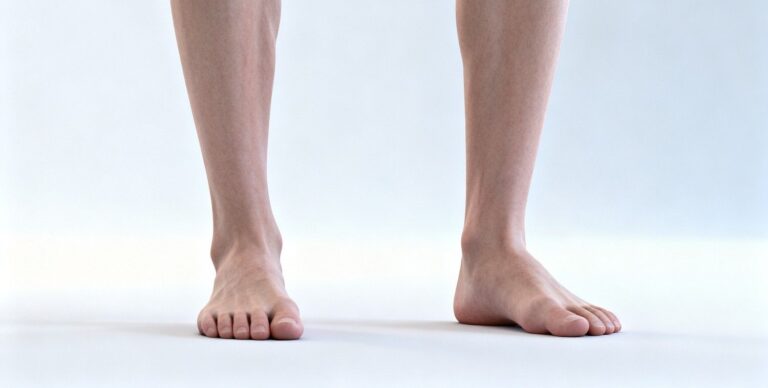
Flat feet—also known as fallen arches—occur when the arch of the foot is lower than expected or collapses when weight is applied.
In a neutral foot:
- the arch lifts slightly off the ground
- pressure is distributed between heel, forefoot, and outer edge
With flat feet:
- the arch lowers or disappears under load
- more pressure shifts toward the inner side of the foot
This change might seem small, but it affects how force travels through your body.
Why Diagnosis Isn’t Always Straightforward
One of the biggest misconceptions is that flat feet are always visible.
In reality, there are different types:
- Flexible flat feet: arch appears when sitting, disappears when standing
- Rigid flat feet: arch remains low regardless of position
Because of this, a proper flat feet diagnosis looks at both structure and movement—not just appearance.
What Causes Flat Feet in the First Place?
Before diagnosis, it helps to understand what leads to flat feet.
1. Muscle Weakness
The small muscles inside your foot help support the arch. When they weaken, the arch becomes less stable under load.
2. Tendon Dysfunction
The posterior tibial tendon plays a key role in maintaining the arch. If it becomes strained or inflamed, the arch can gradually collapse.
3. Ligament Laxity
Some people naturally have more flexible ligaments, which can reduce structural support.
4. Repetitive Stress
Standing for long hours, walking on hard surfaces, or wearing unsupportive shoes can contribute over time.
5. Age and Load
As tissues lose elasticity or as load increases, the foot’s ability to maintain structure can decline.
Risk Factors That Influence Diagnosis
Not everyone with flat feet experiences symptoms—but certain factors make diagnosis more likely.
- prolonged standing or physical work
- previous foot or ankle injuries
- unsupportive footwear over time
- increased body weight
- reduced muscle strength
These factors don’t cause flat feet on their own—but they increase the likelihood that structural changes will become noticeable.
How Symptoms Differ Between Individuals
Flat feet don’t feel the same for everyone.
Some people experience:
- no pain at all
- only mild fatigue
Others notice:
- arch discomfort
- heel pain
- changes in walking mechanics
And in some cases, symptoms extend beyond the foot:
- knee strain
- hip discomfort
- lower back tension
That variation is why flat feet diagnosis focuses on function—not just symptoms.
Early Signs That Lead to Diagnosis
Many diagnoses start with small observations.
You might notice:
- your feet feel more tired than usual
- your shoes wear unevenly (especially on the inside edge)
- your ankles roll inward slightly
If you’re unsure how that inward movement works, see flat feet vs overpronation.
These signs often appear before pain, which is why they’re easy to overlook.
When Flat Feet Become a Concern
Flat feet don’t always require treatment. But certain changes signal that a closer look is needed.
Pay attention if you notice:
- persistent discomfort in the arch or heel
- swelling along the inside of the ankle
- difficulty standing or walking for extended periods
- symptoms that worsen over time
At this stage, a proper flat feet diagnosis becomes more important—not just to confirm the condition, but to understand its severity.
The Goal of Diagnosis
Diagnosis isn’t about labeling your foot as “normal” or “abnormal.”
It’s about understanding:
- how your foot handles pressure
- how your arch behaves under load
- how your movement affects the rest of your body
That information helps determine whether your flat feet are:
- functional and manageable
- or contributing to strain and discomfort
The Bigger Picture
Flat feet are not just about the arch. They’re part of a larger system that includes muscles, tendons, and joints working together.
When one part changes:
- movement patterns shift
- pressure redistributes
- other areas compensate
That’s why diagnosis looks beyond the foot itself.
Once you understand what flat feet are and why they develop, the next step is seeing how a flat feet diagnosis actually happens in practice. It’s rarely based on a single test. Instead, it’s a combination of observation, movement analysis, and—when needed—clinical evaluation.
The goal isn’t just to confirm that your arch is low. It’s to understand how your foot behaves under real-world conditions.
How Flat Feet Are Diagnosed at Home
Before seeing a specialist, many people first notice patterns on their own. These informal checks don’t replace a diagnosis, but they can point you in the right direction.
1. The Wet Foot Test
This is one of the most common self-check methods.
How it works:
- Wet the bottom of your foot
- Step onto a flat surface (like paper or tile)
- Look at the footprint
What to look for:
- a full footprint with little curve → suggests a low arch
- a visible inward edge → indicates arch collapse under weight
This gives a basic visual clue—but it doesn’t show how your foot moves.
2. Mirror Check (Standing Alignment)
Stand in front of a mirror and look at your ankles.
Signs to watch:
- ankles tilting inward
- arches flattening when standing
This can reveal early alignment changes.
3. Shoe Wear Patterns
Your shoes often tell a story before your body does.
If the inside edge of your sole wears down faster, it may indicate inward rolling. For a deeper explanation of that movement, see flat feet vs overpronation.
4. Balance Awareness
Try standing on one foot.
If you feel unstable or notice your arch collapsing, it may indicate reduced support from the foot’s stabilizing muscles.
Clinical Diagnosis: What a Specialist Looks For
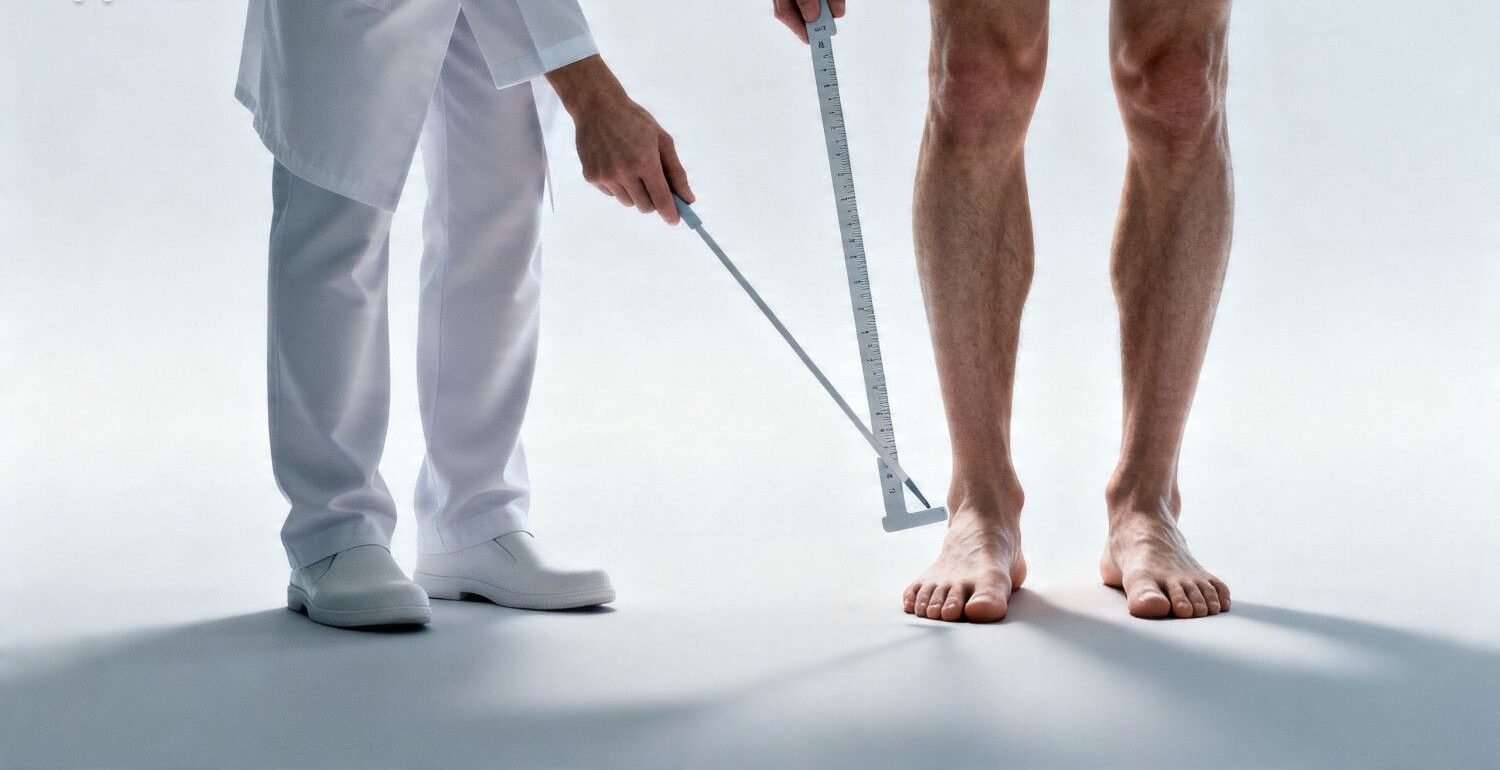
If symptoms persist or worsen, a podiatrist or healthcare provider will take a more detailed approach.
1. Visual and Structural Assessment
The first step is simple observation:
- foot shape at rest
- arch height
- alignment of the ankle
They may compare both feet and check for asymmetry.
2. Gait Analysis (How You Walk)
This is one of the most important parts of flat feet diagnosis.
A specialist will observe:
- how your foot lands
- how it rolls during movement
- how your weight shifts
This helps identify whether flat feet are affecting your mechanics.
3. Range of Motion Testing
Your ankle and foot mobility are evaluated to see:
- how flexible your joints are
- whether movement is restricted or excessive
Both limited and excessive motion can contribute to instability.
4. Tendon and Muscle Evaluation
The posterior tibial tendon is often assessed because of its role in supporting the arch.
Weakness or tenderness here can indicate progression toward more serious issues.
5. Imaging (When Needed)
In more complex cases, imaging may be used:
- X-rays → to assess bone structure
- MRI or ultrasound → to evaluate soft tissue
This is typically reserved for cases with persistent pain or suspected injury.
What Happens After Diagnosis?
Once flat feet are confirmed, the focus shifts from identification to management.
Not every diagnosis leads to treatment. In many cases, flat feet are simply monitored—especially if there’s no pain.
But if symptoms are present, the next step is deciding how to reduce strain.
First Steps You Can Take at Home
Before adding external support, simple adjustments can help improve how your foot functions.
1. Strengthening Exercises
Targeted movements help activate the muscles that support the arch.
These don’t change structure overnight, but they improve control. For guidance, see flat feet exercises.
2. Activity Adjustments
Reducing prolonged stress can prevent symptoms from worsening.
- take breaks during long standing periods
- vary surfaces when possible
- avoid sudden increases in activity
3. Footwear Awareness
Supportive shoes can reduce how much the arch collapses during daily movement.
Even small changes here can improve comfort.
When Insoles Become Useful
Insoles are not always necessary—but they become helpful when daily load exceeds what your foot can manage comfortably.
Situations Where Insoles Help
- long hours standing or walking
- recurring fatigue or discomfort
- noticeable inward rolling during movement
Insoles work by:
- supporting the arch
- redistributing pressure
- stabilizing the heel
For more detailed guidance, see best insoles for flat feet.
When Medical Care Is Needed
Flat feet diagnosis becomes more critical when symptoms progress.
Seek professional care if:
- pain becomes sharp or persistent
- swelling develops along the inside of the ankle
- walking feels unstable
- symptoms worsen over time
These may indicate tendon dysfunction or other structural issues that require targeted treatment.
Preventing Progression After Diagnosis
Once you know you have flat feet, the focus shifts to long-term management.
1. Stay Consistent With Support
Whether through exercises or footwear, consistency matters more than intensity.
2. Monitor Changes Over Time
Pay attention to:
- increasing fatigue
- changes in movement
- new areas of discomfort
Early adjustments prevent larger problems.
3. Maintain Strength and Mobility
Even after symptoms improve, continuing simple exercises helps maintain stability.
4. Understand Your Movement Pattern
Flat feet often involve inward rolling. Recognizing this helps you adjust posture and walking mechanics over time.
FAQ
Can flat feet be diagnosed without a doctor?
Basic signs can be identified at home, but a full diagnosis requires movement analysis and clinical evaluation.
Are flat feet always a problem?
No. Many people have flat feet without symptoms. Diagnosis becomes important when discomfort or instability develops.
Do I need imaging for flat feet?
Not usually. Imaging is only used in more complex or painful cases.
Can flat feet get worse over time?
Yes, especially if underlying causes like muscle weakness or tendon strain are not addressed.
Do insoles replace exercises?
No. Insoles provide support, while exercises improve function. They work best together.
To get the full picture, browse our complete guide collection here.
Educational Takeaway
A proper flat feet diagnosis isn’t just about identifying a low arch—it’s about understanding how your foot functions under pressure.
- structure matters
- movement matters
- consistency matters
When you understand how your foot behaves, you can make informed decisions about support, activity, and long-term care.