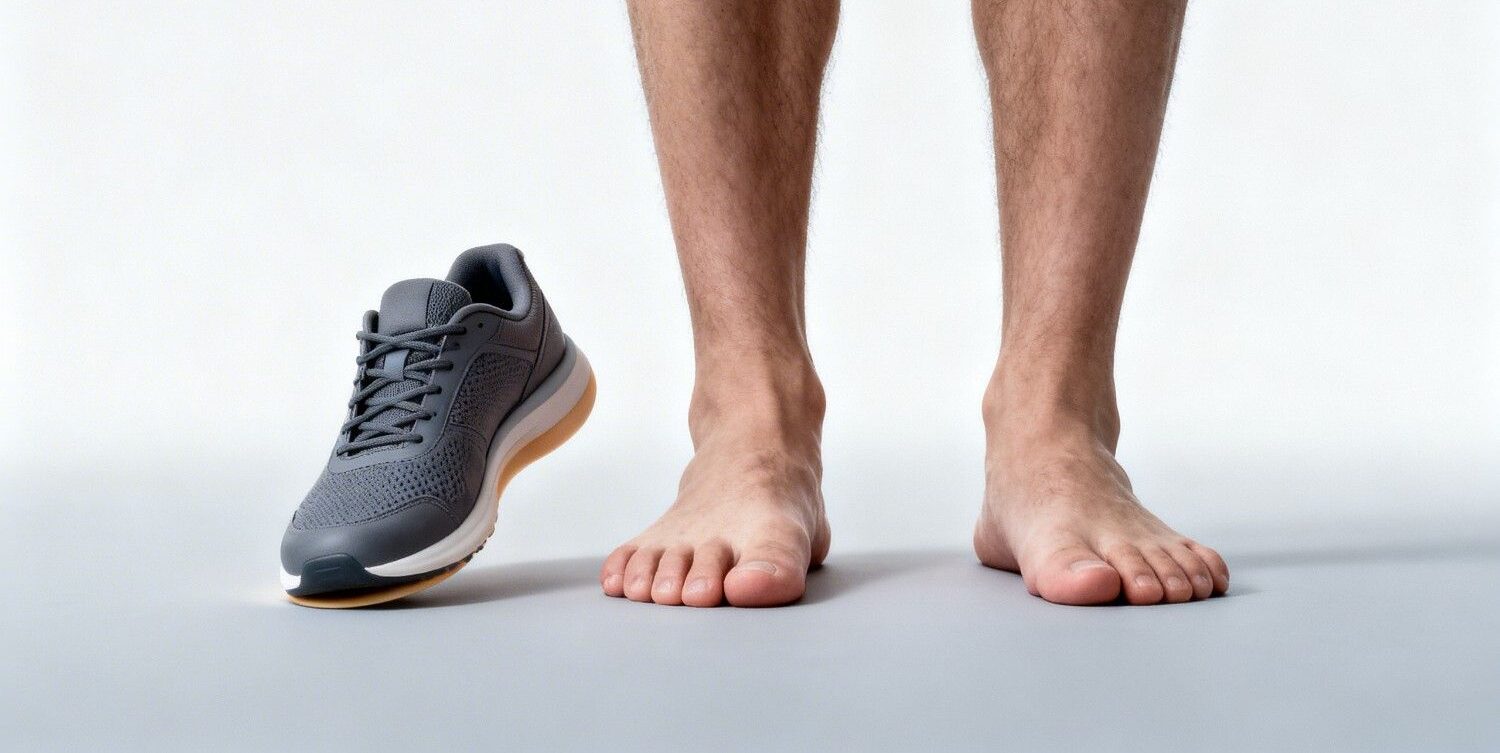
Best Insoles for Flat & Wide Feet
If you have flat feet and wide feet, you’ve probably noticed something frustrating: most insoles don’t just fail—they make things worse.
You try a pair that promises arch support, but it feels too narrow. Another one fits your width but offers no structure. Some feel okay for a few hours, then your arches collapse, your heels ache, and your shoes start feeling tight and uncomfortable.
The issue isn’t just your feet—it’s that most insoles aren’t designed for this combination.
People searching for solutions around flat feet wide feet problems are dealing with two overlapping challenges:
- lack of arch support
- lack of space
And unless an insole addresses both, it won’t work long-term.
The Core Problem: Flat + Wide Changes Everything
Flat feet already reduce your foot’s ability to absorb shock. The arch collapses inward, shifting pressure unevenly across your foot.
Now add width into the equation.
Wide feet don’t just need more room—they change how your foot sits inside the shoe. Standard insoles often push your foot upward or inward, creating pressure points instead of relieving them.
This leads to:
- Arch fatigue from lack of support
- Side pressure from narrow designs
- Heel instability due to poor fit
- Faster wear and breakdown of insoles
For people dealing with flat feet wide feet, the wrong insole creates a constant trade-off:
👉 support vs comfort
👉 structure vs fit
The right one solves both.
Why Standard Insoles Don’t Work
Most insoles are built for “average” feet—medium width, neutral arch, moderate activity.
That’s not your situation.
Here’s where they fall short:
1. Too Narrow by Design
Standard insoles often don’t match wide foot shapes. They sit inside the shoe but don’t fully support the foot, leaving edges unsupported.
2. Weak Arch Structure
Soft, flexible insoles collapse under pressure. With flat feet, that means zero real support.
3. Poor Fit Inside the Shoe
Some insoles try to fix support by adding thickness. But in wide feet, this often crowds the shoe vertically and creates discomfort.
4. Uneven Pressure Distribution
Because they don’t align with your foot shape, pressure shifts to the wrong areas—usually the heel and outer edges.
What Features Actually Matter
If you’re dealing with flat feet wide feet, certain features become essential—not optional.
1. Wide-Friendly Design
This is the first filter.
You need insoles that:
- match wider foot shapes
- don’t taper too aggressively
- sit fully under your foot
If the insole doesn’t match your width, nothing else matters.
2. Structured Arch Support
Flat feet require reinforcement.
Look for:
- firm or semi-rigid arch support
- designs that hold shape under pressure
Soft arches won’t help—they’ll collapse quickly. For a broader understanding, see best insoles for flat feet .
3. Balanced Cushioning
Cushioning should absorb impact without taking up too much space.
Too soft:
- compresses quickly
- loses effectiveness
Too thick:
- makes shoes tight
The goal is controlled cushioning—especially in the heel and forefoot.
4. Material Quality
Materials determine both comfort and durability.
Common options:
- EVA → lightweight but can compress
- Polyurethane → denser and longer-lasting
- Gel → targeted shock absorption
For flat feet wide feet, higher-density materials tend to perform better over time.
5. Moderate Firmness
You need a balance.
- Too soft → no support
- Too rigid → uncomfortable
Moderate-to-firm insoles provide stability while still being wearable all day.
6. Durability
Wide feet + flat arches = more surface pressure.
If the insole breaks down, support disappears.
To understand lifespan expectations, see how long do insoles last.
How to Choose the Right Insoles (Simple Framework)
Instead of guessing, follow this simple process.
Step 1: Check Your Shoe Width
Before buying anything, confirm your shoes actually accommodate wide feet.
If your shoe is already tight:
👉 even the best insole won’t fix it
Step 2: Prioritize Fit First
Many people focus on arch support immediately—but if the insole doesn’t fit your width, it won’t function properly.
Step 3: Match Support to Your Needs
Ask yourself:
- Do your arches collapse quickly? → stronger support
- Do your feet get sore from impact? → more cushioning
- Do your feet feel unstable? → structured design
Step 4: Avoid Overcorrection
Not every flat foot needs aggressive correction.
For many flat feet wide feet cases:
👉 moderate support works better than extreme rigidity
Step 5: Consider Foot Mechanics
Flat feet often come with inward rolling.
If that applies to you, stability becomes more important. You can explore this further here: flat feet vs overpronation.
The Takeaway Before You Buy
The biggest mistake people make is trying to force a standard insole to work for a non-standard foot.
If you have flat feet wide feet, your insole must:
- match your foot width
- provide structured arch support
- maintain comfort without crowding your shoe
- hold up under daily pressure
Anything less leads back to the same cycle: discomfort, trial-and-error, and wasted money.
Now that you understand what actually matters, the next step is choosing the right type of insole. Not every design works for flat feet wide feet, and the differences between categories are more important than most people realize.
Some prioritize structure. Others focus on cushioning. A few try to balance both—but not all succeed.
Below are five categories that consistently work in real-world use, especially for wider foot shapes combined with low arches.
1. Wide-Fit Orthotic Insoles (Structured Support)
These are specifically built with a broader shape and reinforced arch support. Unlike standard orthotics, they don’t taper too aggressively, which makes them a better match for wide feet.
Best for:
People who need strong arch support and a true wide fit
Pros:
- Proper width coverage (no edge pressure)
- Firm arch support that holds shape
- Improves alignment and stability
Limitations:
- Can feel firm initially
- Requires a short adjustment period
- May not fit very tight shoes
Comparison Insight:
Compared to regular orthotics, these solve the fit issue first, then add support. For flat feet wide feet, that order matters more than people think.
2. High-Density Cushioning Insoles (Comfort + Space Balance)
These insoles focus on shock absorption while maintaining a relatively low profile. They’re often made with denser foam that doesn’t flatten as quickly.
Best for:
People who want comfort without sacrificing too much space inside the shoe
Pros:
- Reduces pressure on heels and forefoot
- More forgiving feel for daily wear
- Works well for walking and standing
Limitations:
- Less structural support
- May wear down faster than orthotics
Comparison Insight:
If rigid insoles feel uncomfortable, this category gives you a softer landing—without completely losing function.
3. Stability Insoles for Wide Feet (Motion Control)
These are designed to control inward rolling while still accommodating wider foot shapes. They combine structured arch support with deeper heel cups and stabilizing layers.
Best for:
Flat feet with noticeable instability or overpronation
Pros:
- Improves alignment
- Reduces ankle rolling
- Supports knees and lower body mechanics
Limitations:
- Slightly firmer feel
- Can feel restrictive in very flexible shoes
Comparison Insight:
If your feet collapse inward when you walk, this type directly addresses the root issue. Learn more about movement patterns here: flat feet vs overpronation.
4. Low-Profile Wide Insoles (Tight Shoe Friendly)
These are thinner insoles designed for shoes with limited internal space—but still shaped to accommodate wider feet.
Best for:
People wearing tighter sneakers or casual shoes that still need support
Pros:
- Fits into lower-volume shoes
- Doesn’t crowd your foot
- Lightweight and easy to use
Limitations:
- Less cushioning
- Reduced long-term durability
Comparison Insight:
These are a compromise between fit and function. They won’t provide maximum support, but they’re often the only viable option for tighter footwear.
5. Hybrid Everyday Insoles (Balanced Option)
This category blends moderate support, cushioning, and flexibility. They’re designed for all-day use across different environments.
Best for:
People who want a versatile solution without extreme features
Pros:
- Balanced comfort and support
- Suitable for mixed activity
- Easier transition from standard insoles
Limitations:
- Not ideal for severe flat feet
- May not fully support high-pressure use
Comparison Insight:
If your symptoms are moderate, this is often the most practical starting point. But for flat feet wide feet, make sure the shape truly matches your foot—not just the label.
FAQ
Do insoles for wide feet really make a difference?
Yes. A proper wide fit ensures your entire foot is supported, not just the center. Without that, pressure shifts and discomfort builds quickly.
Can I use regular insoles if I have wide feet?
You can—but they often won’t perform well. Narrow designs don’t support the full foot, which reduces both comfort and stability.
Are firm insoles better for flat feet?
Generally, yes. Moderate-to-firm insoles provide better structural support, especially for flat feet wide feet, where collapse is a common issue.
How long do these insoles last?
Most last between 3–6 months depending on usage and material quality. For a deeper breakdown, see how long do insoles last.
Do insoles fix flat feet permanently?
No. They don’t change foot structure permanently, but they improve alignment and reduce strain while worn. More details here: do insoles fix flat feet.
Final Verdict
Finding the right insole for flat feet wide feet isn’t about choosing the most popular option—it’s about choosing the one that matches both your foot shape and support needs.
- Need strong correction? → Wide-fit orthotics
- Want more comfort? → High-density cushioning
- Struggling with instability? → Stability insoles
- Using tighter shoes? → Low-profile wide insoles
- Want balance? → Hybrid everyday insoles
When the fit is right and the support holds, everything changes. Less fatigue. Better alignment. More comfort throughout the day.