How to Clean White Nursing Shoes
White nursing shoes can look clean at the start of a shift and noticeably different by the end. Everyday walking can leave gray marks around the toes, dirt along the outsole, and stains from ordinary workplace use. In healthcare settings, shoes may also pick up substances that need to be cleaned promptly and handled according to workplace procedures. Knowing how to clean white nursing shoes properly helps you maintain their appearance without unnecessarily damaging the materials, seams, adhesives or cushioning.
The safest cleaning method depends on what your shoes are made of. For many pairs, a soft brush, a damp cloth and mild soap are a good starting point, but manufacturer instructions should always take priority. Mesh, leather, synthetic leather and rubber components may need different care. Avoid aggressive scrubbing or strong cleaning chemicals unless the manufacturer specifically recommends them.
Our picks: If your white nursing shoes are past cleaning, these two white styles are worth a look. Check the current listing for the exact white colorway and your size.
Brooks Addiction Walker 2 (women’s) – Structured walking support for long shifts.
HOKA Bondi SR (women’s) – A very cushioned feel for hours on your feet.
How to clean white nursing shoes step by step
For routine dirt and surface marks, start with the gentlest method that is suitable for your shoe’s materials. You usually do not need to soak the entire shoe to clean its exterior.
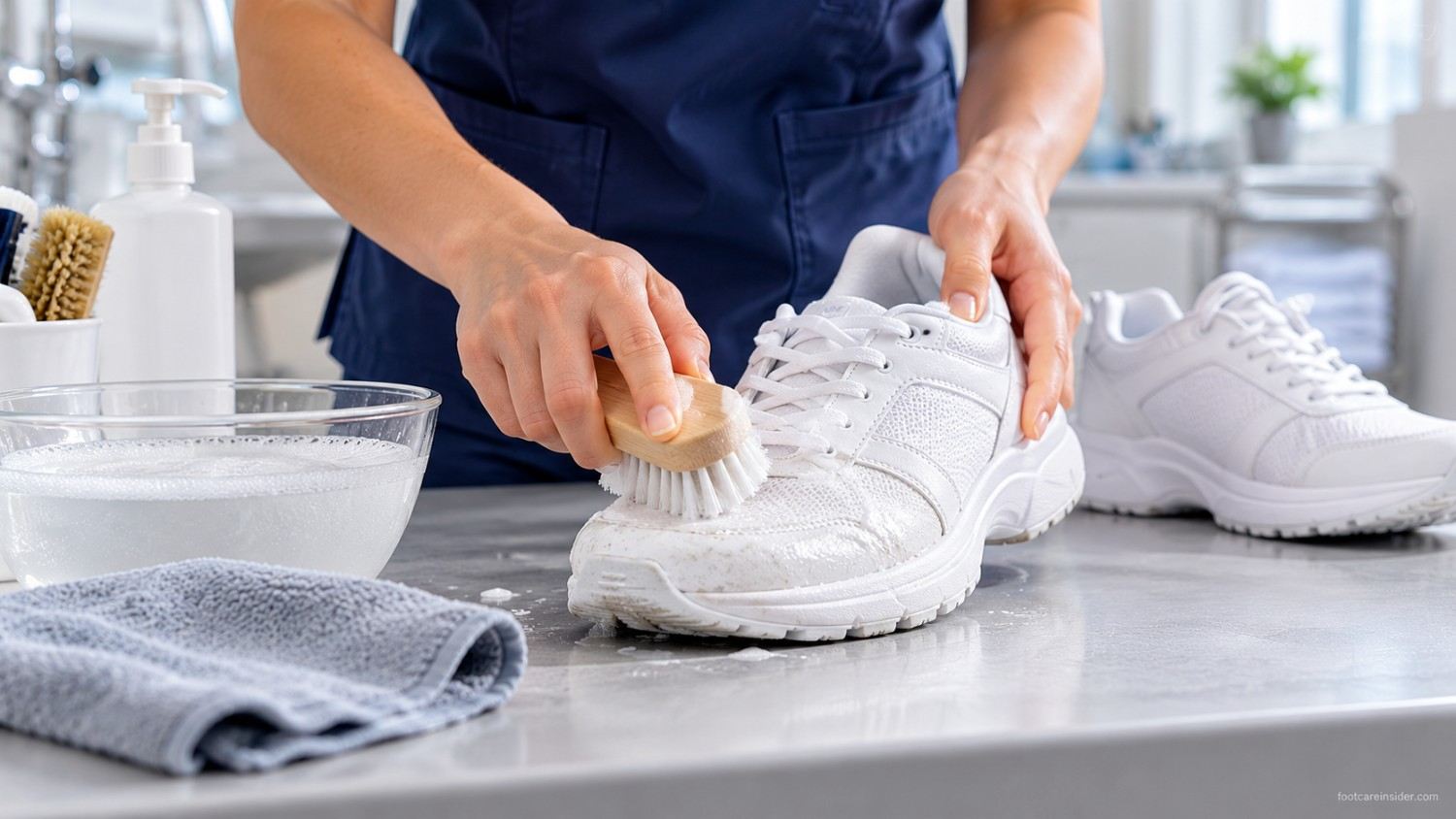
- Remove loose dirt. Use a soft-bristled brush or dry cloth to remove dust and debris from the upper and outsole. Brush gently around seams and textured areas.
- Remove the laces. If the laces are removable, take them out so you can clean the tongue and areas underneath them. Check the care instructions before washing the laces separately.
- Prepare a mild cleaning solution. Mix a small amount of mild soap with lukewarm water, unless the manufacturer recommends a different cleaner.
- Test a hidden area. Lightly apply the solution to an inconspicuous spot first. Check for discoloration, texture changes or other signs that the material does not tolerate the cleaner.
- Clean the upper gently. Use a soft cloth or suitable brush, working in small sections. Avoid saturating mesh, seams or areas where the upper joins the sole.
- Wipe away residue. Use a separate cloth dampened with clean water to remove remaining soap. Do not leave cleaning solution on the material.
- Air-dry the shoes. Blot away excess moisture with a clean towel and allow the shoes to dry naturally in a well-ventilated area before wearing them again.
Keep the shoes away from direct high heat, radiators and hair dryers unless the manufacturer explicitly permits that method. Excessive heat can affect adhesives and some synthetic materials. If the shoes have removable insoles, check their care instructions before taking them out or cleaning them separately.
How to clean white nursing shoes made from different materials
Not all white shoes respond to the same cleaning method. A technique that works on a smooth synthetic upper may damage delicate mesh or leave marks on leather. Identify the material before choosing a cleaner or brush.
White mesh nursing shoes
Mesh uppers are common in lightweight work sneakers. Their woven structure allows dirt to settle between the fibers, so gentle brushing is usually more appropriate than vigorous scrubbing. Use a soft brush or cloth with a mild cleaning solution, working carefully over visible marks.
Avoid soaking the shoe or pushing dirt deeper into the mesh with excessive pressure. Rinse away soap residue using a lightly damp cloth and allow the shoes to air-dry completely. If a stain remains, check the manufacturer’s cleaning guidance before trying a stronger product.
White leather or synthetic leather nursing shoes
Smooth leather and synthetic leather can often be wiped clean more easily than porous mesh, but their finishes are not identical. Start with a soft, damp cloth and a cleaner approved for the specific material. Use gentle movements rather than abrasive pads that may scratch the surface or remove its finish.
Do not assume that products intended for natural leather are suitable for synthetic leather, or vice versa. Avoid excessive water around stitched areas and seams. Once clean, wipe away residue and let the shoes dry naturally.
White rubber soles and midsoles
The white rubber or foam around the bottom of a nursing shoe can collect dark scuffs that make an otherwise clean pair look worn. Start with a damp cloth and mild soap. A soft brush can help reach grooves and textured areas of the outsole.
Use care around the junction between the upper and sole. Aggressive scrubbing or unsuitable solvents may damage the finish or affect the adhesive. Also, clean the outsole separately from the upper so dirt from the floor is not transferred back onto the fabric or leather.
How to remove common stains from white nursing shoes
The best approach depends on the type of mark and the material underneath it. Begin with gentle cleaning and increase the intensity only when the manufacturer’s guidance allows it. A stain that does not come out immediately is not a reason to apply bleach or an untested chemical.
Gray scuff marks
Gray marks around the toe and sides often come from contact with floors, furniture or other surfaces. Try wiping the area with a damp microfiber cloth and mild soap. If the mark remains, use a soft brush suitable for the upper material. Avoid abrasive cleaning pads unless the manufacturer confirms they are safe for that finish.
Yellowing
Yellow discoloration can have several causes, including aging, oxidation, product residue or exposure to unsuitable cleaning agents. It may not be removable with ordinary soap and water. Before using a whitening product, check whether it is approved for the exact material and color finish of the shoe.
Chlorine bleach is not a universal solution for white footwear. It may discolor some materials, weaken components or leave additional marks. Never mix cleaning products, and follow the product label and shoe manufacturer’s instructions.
Dirt and marks on the outsole
Use a brush to loosen dirt from the tread, then wipe the outsole with a cloth and an appropriate cleaning solution. Pay attention to grooves where debris can accumulate. Keep the dirty cloth away from the shoe’s upper, and remove all cleaning residue before the shoes return to service.
Unknown substances or workplace contamination
Ordinary shoe-cleaning advice is not a substitute for workplace infection-control procedures. If shoes are contaminated with blood, body fluids, chemicals or another potentially hazardous substance, follow your employer’s approved cleaning, disinfection or disposal protocol. Do not assume that household soap, a washing machine or a general-purpose disinfectant is sufficient for every type of contamination.
How to dry white nursing shoes without damaging them
Drying is an important part of cleaning white nursing shoes. Leaving moisture trapped inside can create unpleasant odors, while excessive heat may damage adhesives, finishes or synthetic materials. After cleaning, use a dry towel to blot away excess water from the upper and lining without twisting or squeezing the shoe.
Allow the shoes to air-dry in a well-ventilated area at room temperature. If the inside is damp, loosely place clean, absorbent paper inside to help draw out moisture, replacing it when it becomes wet. Avoid tightly packing the shoes, which can restrict airflow.
Do not put your shoes on a radiator, use a hair dryer on high heat or leave them in strong direct sunlight unless the manufacturer specifically permits it. These methods can cause uneven drying, discoloration or material damage. Make sure the shoes are completely dry before wearing them for another shift.
Can you put white nursing shoes in the washing machine?
Only if the manufacturer says the specific shoes are machine-washable. Some fabric sneakers may tolerate machine washing, while leather, synthetic leather, structured work shoes and shoes with particular adhesives or cushioning may be damaged by it.
Before using a washing machine, check the care label or manufacturer’s instructions. If machine washing is permitted, follow the recommended settings and preparation steps. Do not assume that removing the laces or insoles makes every shoe safe to wash this way.
If the care instructions are unclear, hand-cleaning with a damp cloth and mild soap is generally the more cautious starting point for surface dirt. It gives you better control over the amount of water and pressure used. Avoid soaking the entire shoe unless the manufacturer explicitly recommends it.
How to keep white nursing shoes clean for longer
Regular, gentle maintenance is usually easier than trying to remove weeks of accumulated dirt at once. A quick check after a shift can help you spot marks early and identify damage before it becomes more difficult to manage. Removable insoles collect dirt and odor too, so it also helps to know whether insoles can be washed.
- Remove surface dirt promptly. Wipe away ordinary dust and scuffs before they build up.
- Clean the outsole separately. This helps prevent dirt from the floor transferring onto the white upper.
- Let shoes dry between shifts. Give them enough time to air out rather than storing them while damp.
- Use suitable cleaning products. Follow the manufacturer’s advice and test unfamiliar products on a hidden area when appropriate.
- Store them in a clean, dry place. Avoid damp storage areas and prolonged exposure to direct sunlight.
- Keep a spare pair if practical. Alternating pairs can provide more drying time between shifts, provided both pairs remain suitable for your workplace.
White shoes will not necessarily stay bright forever. Some materials naturally discolor or show wear over time, and repeated cleaning cannot always reverse these changes. The aim is to maintain cleanliness without damaging the shoe or using increasingly harsh chemicals to restore its original appearance.
When should white nursing shoes be replaced instead of cleaned?
Cleaning can improve appearance, but it cannot restore every worn or damaged component. If the outsole is separating, the upper is torn, the heel structure has become unstable or the shoe no longer fits securely, consider replacing it rather than continuing to clean it. If you are choosing a new pair, our guide to slip-resistant shoes for nurses explains what to look for.
Also check whether the outsole has become noticeably smooth or uneven, particularly if the shoes are intended for workplace use where traction matters. A clean-looking shoe is not necessarily a shoe that remains suitable for a demanding shift.
How long nursing shoes last depends on their construction, how frequently they are worn, the surfaces you work on and how well they are maintained. Cleaning is one part of care, but it does not stop normal material wear. The related topic How Long Do Nursing Shoes Last is worth considering when deciding whether a pair needs more care or replacement.
If you are choosing a new pair, the cleaning method should be only one consideration. Material, fit, workplace requirements and ease of maintenance also matter. The guide to Best White Shoes for Nurses provides a starting point for exploring white nursing footwear.
Common Questions
Can I use baking soda to clean white nursing shoes?
Do not assume baking soda is suitable for every material. Its mildly abrasive texture may affect some finishes, and residue can be difficult to remove from mesh. Check the manufacturer’s cleaning guidance first. A damp cloth and mild soap are a more cautious starting point for ordinary surface dirt.
Is bleach safe for whitening nursing shoes?
Not necessarily. Bleach can discolor or damage some fabrics, synthetic materials, adhesives and other shoe components. Use it only if the manufacturer specifically permits it for the shoe’s material and provides suitable instructions. Never mix bleach with other cleaning products.
How often should I clean white nursing shoes?
There is no single schedule for every nurse. Wipe off ordinary dirt as needed and clean the shoes more thoroughly when visible buildup develops. Follow workplace protocols whenever the shoes are exposed to potentially hazardous contamination; routine cosmetic cleaning is not a substitute for required disinfection.
How can I remove a bad smell from white nursing shoes?
Start by allowing the shoes to dry completely in a well-ventilated area. If the insoles are removable, check their care instructions and clean them only as permitted. Persistent odor may indicate trapped moisture or buildup that ordinary surface cleaning will not resolve. Avoid masking the smell with strong fragrances or applying unapproved chemicals inside the shoe.
Can I dry white nursing shoes in direct sunlight?
Air-drying in a well-ventilated area away from excessive heat is the safer general approach. Strong sunlight can affect some materials and may contribute to discoloration. Follow the manufacturer’s instructions for the particular shoe.
Why do white nursing shoes turn yellow after cleaning?
Yellowing can result from material aging, oxidation, cleaning-product residue or the use of an unsuitable cleaner. Rinse away approved cleaning solutions carefully with a damp cloth and allow the shoes to dry naturally. If discoloration remains, check the manufacturer’s guidance before trying whitening treatments.
Keeping white nursing shoes clean starts with identifying their materials and using the gentlest suitable cleaning method. Remove dirt carefully, avoid unapproved chemicals, and let the shoes dry fully before wearing them again. Follow workplace procedures for any hazardous contamination, and remember that cleaning cannot restore worn tread, damaged seams or a deteriorating fit. Regular maintenance can help your shoes look presentable for longer while allowing you to recognize when they are no longer suitable for work.