Flat Feet and Ankle Pain: Causes and Support
If you’ve noticed aching around your ankles after standing, walking, or even just moving through your day, flat feet could be part of the reason. Many people focus on the arch when they think about foot structure—but the ankle often takes on the extra strain when that arch isn’t providing enough support.
Flat feet ankle pain doesn’t always appear suddenly. It usually builds over time, starting as mild fatigue and gradually becoming more noticeable with daily activity. Understanding why this happens makes it easier to manage before it turns into a more persistent issue.
How Flat Feet Affect the Ankle
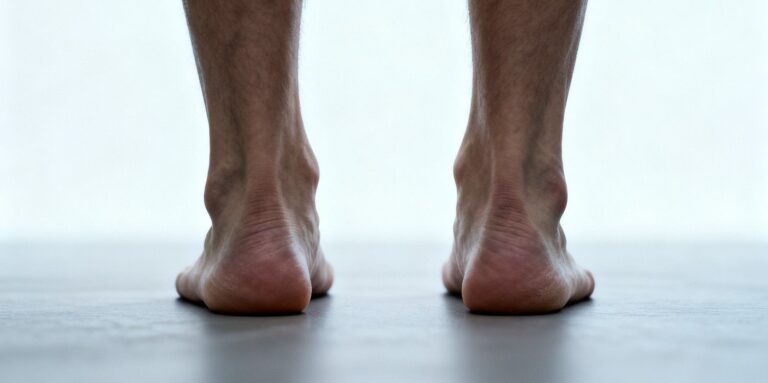
Your foot and ankle work together as a single system. When the arch of the foot functions well, it helps distribute weight evenly and stabilizes movement.
New to this topic? Start with our flat feet guide.
With flat feet, that support is reduced. When you stand or walk:
- the arch lowers more under pressure
- the foot rolls inward more easily
- the ankle shifts slightly out of its neutral alignment
This inward movement can place extra strain on the inner side of the ankle, especially during long periods of weight-bearing.
Flat feet are also often linked to movement patterns like inward rolling, which is explained more clearly in flat feet vs overpronation. This connection is important because it shows how the issue isn’t just structural—it’s also about how your body moves.
Why the Ankle Starts to Hurt
Ankle discomfort linked to flat feet is usually not caused by one single factor. It develops from how your body adapts to repeated stress.
When the arch doesn’t absorb load effectively:
- the ankle has to stabilize more than usual
- supporting muscles stay active longer
- tendons take on additional strain
Over time, this can lead to fatigue, soreness, or a feeling of weakness around the ankle.
Unlike sudden injuries, this type of pain is often gradual. You might not notice it at first, but it becomes more consistent as the load continues day after day.
Common Causes Behind Flat Feet and Ankle Pain
Several underlying factors contribute to this connection.
Muscle fatigue
The muscles that support both the arch and ankle can become overworked when they compensate for reduced structure.
Tendon strain
The posterior tibial tendon plays a key role in supporting the arch and stabilizing the ankle. When it’s overloaded, discomfort can develop along the inner ankle.
Ligament stress
Ligaments help maintain joint stability. Repeated strain can make the ankle feel less supported over time.
Daily load
Long hours of standing, walking, or repetitive movement increase the stress placed on the foot and ankle.
If you want a deeper understanding of how these factors develop, this guide on what causes flat feet explains the broader causes in more detail.
Inner Ankle Pain, Weak Ankles or Rolling Ankles: What Is the Difference?
“Ankle pain” can mean several different things with flat feet. This table separates the most common patterns. It is a guide, not a diagnosis.
| What you notice | What it can point to | What to do |
|---|---|---|
| Aching or soreness along the inner ankle, sometimes with mild swelling | Overloaded tendons on the inside of the ankle, often the posterior tibial tendon | Reduce load, add support, and see a clinician if it lasts more than a few weeks or keeps getting worse |
| A weak or unsteady feeling, ankles that tire quickly | Fatigued stabilising muscles and less arch support | Balance and calf work, supportive shoes, shorter standing blocks |
| A sudden twist followed by sharp pain or bruising | A sprain or other injury, not a flat feet problem on its own | Rest and get it checked, especially if you cannot put weight on it |
| Pain on the outer side of the ankle | Can be linked to a very collapsed arch pressing the heel bone against the ankle | Worth a professional assessment |
Pain on the inside of the ankle that keeps building, or an arch that seems to be flattening over time, deserves a proper check. Our guide on whether flat feet get worse over time explains what to watch for.
Risk Factors That Increase Ankle Discomfort
Certain situations make ankle pain more likely when you have flat feet.
Prolonged standing
Jobs that require standing for hours limit recovery time for the foot and ankle.
Footwear
Shoes without proper structure allow the foot to collapse more under load, increasing strain on the ankle.
Hard surfaces
Walking or standing on firm flooring increases impact and reduces natural cushioning.
Body load
More weight increases the demand placed on both the arch and ankle structures.
These factors don’t always cause pain on their own, but they increase the likelihood of discomfort over time.
Early vs More Noticeable Symptoms
Flat feet ankle pain usually develops gradually.
Early signs:
- mild soreness around the inner ankle
- fatigue after long periods of standing
- slight discomfort that improves with rest
More noticeable symptoms:
- persistent aching during daily activity
- swelling along the inner ankle
- a feeling of instability when standing or walking
Some people also notice that the ankle feels weaker or less controlled, especially after a long day.
When It Becomes More Than Local Discomfort
Ankle pain doesn’t always stay limited to the ankle. Because your foot affects how your body moves, changes in alignment can influence other areas.
If the ankle continues to compensate:
- movement patterns may change
- stress can shift upward
- other joints may begin to feel the impact
For example, altered foot mechanics can contribute to knee discomfort, which is explained further in why flat feet cause knee pain.
At this stage, the issue becomes less about one area and more about how your body is handling load overall
How to Reduce Ankle Pain With Flat Feet
Improving comfort usually starts with reducing how much strain your ankle has to absorb during daily activity. The goal isn’t to force your foot into a different shape, but to help it handle load more efficiently.
Gentle strengthening can make a noticeable difference over time. Exercises that target the foot and lower leg—like controlled calf raises or simple balance work—help the muscles support the arch and stabilize the ankle more effectively. When those muscles are more active, the ankle doesn’t have to compensate as much.
Movement habits also matter. Standing in one position for long periods keeps the same structures under constant load. Shifting weight, taking short walking breaks, or slightly changing stance can reduce continuous strain on the inner ankle.
Load management is another key piece. If your day involves a lot of standing or walking, breaking that time into smaller segments when possible helps prevent fatigue from building too quickly.
Ankle Exercises for Flat Feet
Exercises that build control around the ankle and arch are among the most useful things you can do. Do them slowly, keep the movement pain-free, and stop if anything sharp appears.
- Calf raises: rise onto the balls of your feet and lower slowly. Start with both legs, then progress to one leg as it gets easy.
- Single-leg balance: stand on one foot near a wall for 30 seconds, then try it with your eyes closed or on a folded towel.
- Short-foot exercise: without curling your toes, gently draw the ball of the foot toward the heel to lift the arch.
- Band work for the ankle: with a light resistance band, turn the foot inward and outward in a controlled way.
Two to three sets of 10 to 15 repetitions, a few days a week, is a common starting point. Our guide to flat feet exercises has more.
Where Insoles Can Help
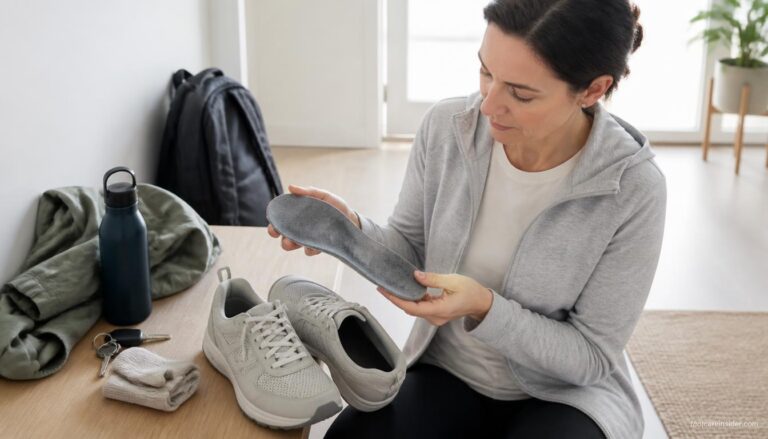
Even when you’re focusing on improving strength and movement, external support can still play a role—especially during longer or more demanding days.
Insoles help by:
- redistributing pressure across the foot
- providing additional arch support
- reducing the amount of inward movement
For people who spend long hours on their feet, this can reduce how much work the ankle has to do. Some people explore options like insoles for standing all day to better understand how added support can improve daily comfort.
It’s important to see insoles as a support tool, not a complete solution. They help manage stress during activity, but they don’t replace the need for strength and movement.
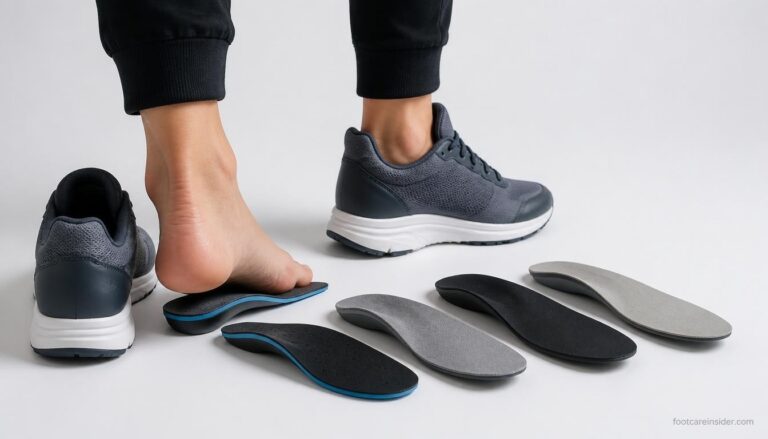
Shoes and Insoles That Help the Ankle
Look for a firm heel counter (squeeze the back of the shoe, it should not collapse), a stable midsole that does not twist easily, and enough depth to take an insole. A deep heel cup in the insole helps control the heel, which sits directly under the ankle. Our guide to supportive shoes for flat feet covers shoes, and insoles for overpronation covers the inward roll that loads the ankle. If standing is the main trigger, see flat feet pain after standing all day.
When Medical Care Is Needed
Most cases of mild ankle discomfort can be managed with simple adjustments. However, certain signs suggest it’s worth getting professional advice.
You may want to seek evaluation if:
- pain becomes persistent or worsens over time
- swelling appears along the inner ankle
- the ankle feels unstable during walking
- discomfort begins to affect other areas of the body
A clinician can assess how your foot and ankle move together and determine whether additional support, therapy, or treatment is needed.
Preventing Ankle Pain From Getting Worse
Preventing progression is often about small, consistent habits rather than big changes.
Wearing supportive footwear can reduce unnecessary strain by helping maintain better alignment.
Staying active with regular, low-impact movement helps keep muscles engaged and responsive.
Avoiding long periods of repetitive stress—without breaks or variation—can reduce the load placed on the ankle over time.
Consistency is what allows the foot and ankle to adapt in a more balanced way.
A Simple Way to Think About It
Your foot absorbs load.
Your ankle stabilizes it.
When the foot struggles, the ankle works harder.
Common Questions
Can flat feet directly cause ankle pain?
Yes, flat feet can increase strain on the inner ankle because the arch doesn’t support weight as effectively. This leads to the ankle compensating during standing and walking.
Why does my ankle hurt more after standing all day?
Long periods of standing keep the same structures under constant load. With flat feet, this increases stress on the ankle and can lead to fatigue or soreness.
Do insoles fix ankle pain from flat feet?
Insoles can help reduce strain by supporting the arch and improving pressure distribution. However, they don’t fix the underlying mechanics on their own.
Is ankle pain from flat feet permanent?
Not necessarily. Many people improve their symptoms by adjusting movement habits, strengthening the foot, and using support when needed.
When should I be concerned about ankle pain?
If pain is persistent, worsening, or accompanied by swelling or instability, it’s best to seek professional evaluation.
Why does only the inside of my ankle hurt?
With flat feet the arch lowers and the foot rolls inward, which puts extra load on the tendons that run along the inner ankle. That is why the pain is usually felt there. If it keeps building or swells, get it checked.
Can flat feet cause weak ankles?
They can contribute. When the arch gives less support, the muscles around the ankle work harder to stabilise it and tire sooner, which can feel like weakness. Balance and calf exercises help.
Should I rest or keep moving?
Usually a balance. Reduce long, unbroken standing and high-impact activity while it is sore, but keep gentle movement and strengthening going. Complete rest tends to weaken the supporting muscles.
Final Thoughts
Flat feet and ankle pain are closely connected through how your body handles load and movement.
For some, the discomfort is occasional and manageable. For others, it becomes more noticeable with daily activity, especially when the foot and ankle are under constant stress.
Understanding that connection is what makes a difference. When you combine better movement, consistent support, and awareness of daily load, it becomes much easier to reduce strain and move more comfortably over time.