Best Insoles for Factory Workers
Why Factory Floors Can Leave Your Feet Worn Out
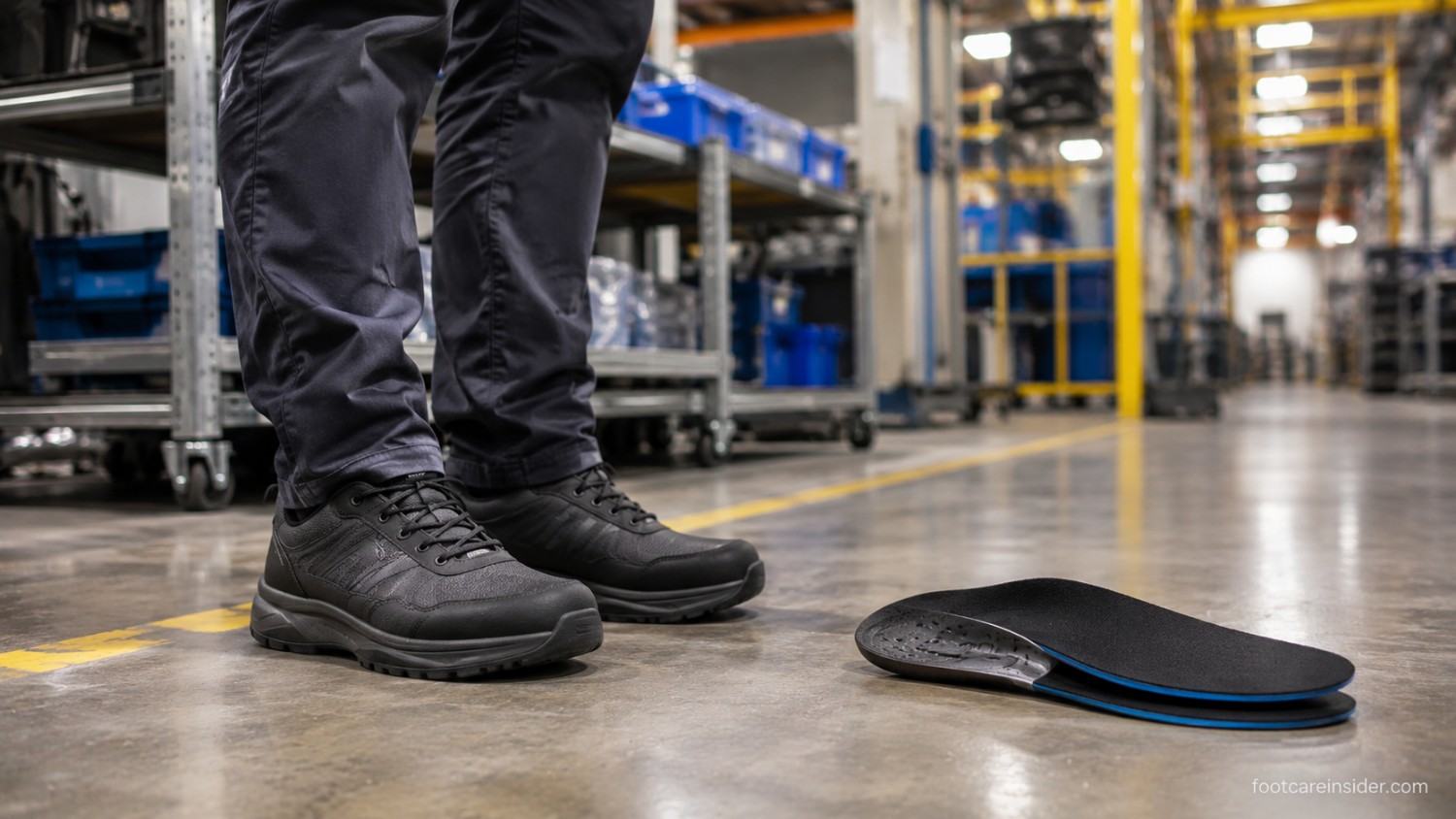
A factory shift can put a very different workload on your feet than a normal day at home. You may spend eight or more hours standing at a workstation, walking between production areas, carrying materials, or repeatedly moving across concrete, tile, or other hard industrial flooring. By the final hours of a shift, the heels can feel sore, the arches tired, or the forefoot pressured inside work shoes or boots. The right insoles for factory workers need to account for that combination of standing, repeated walking, hard surfaces, and long wear time. A soft insole that feels comfortable for an hour may not provide the support or durability you need after an entire shift.
The best choice is usually not simply the softest insole. Factory workers generally benefit from choosing between cushioning, structured support, stability, and durability based on how much they stand and walk, the hardness of the floor, the location of their discomfort, and how much room their work footwear provides.
Start With Your Actual Factory Workday
The useful question is not simply, “Which insole is most comfortable?” It is, “What kind of support does my workday actually require?”
For more picks built for long shifts on hard floors, see the best insoles for standing all day.
Someone who stands mostly in one workstation may prioritize cushioning and pressure distribution, while someone walking through a production facility for most of a shift may need better support retention and durability. If your work boots already feel snug, a bulky heavy-duty insole can create a separate problem by taking away valuable shoe space.
Your discomfort pattern matters too. Heel soreness points toward a different starting point than tired arches or forefoot pressure. Once those factors are clear, choosing an insole becomes much less about marketing claims and more about matching the support to the job.
Why Factory Work Puts Extra Demand on Your Feet
Factory work often combines two types of load: prolonged standing and repeated walking. Even when the total distance walked is not particularly high, hundreds or thousands of small movements across a shift can add up.
Hard concrete or industrial flooring can make that workload feel more demanding because the surface itself provides very little cushioning. Your shoes and insoles become the main interface between your feet and the floor.
Standing at a production station creates another pattern. Your feet continuously support your body weight while you make small adjustments, turn, reach, and shift position. Over several hours, that can contribute to general foot fatigue even when no single movement feels especially strenuous.
The problem can also build gradually. Your feet may feel fine during the first couple of hours, become noticeably tired halfway through the shift, and then develop soreness or pressure by the time you clock out.
If hard flooring is a major part of your work environment, Why Hard Floors Cause Foot Fatigue explains the broader relationship between firm surfaces, prolonged standing, and accumulated foot fatigue.
Why Basic Stock Insoles May Not Hold Up
The insole that comes with a work shoe or boot is often designed as a general starting point rather than specifically for long factory shifts. That does not mean it is automatically inadequate, but it may not match the workload you put through it every day.
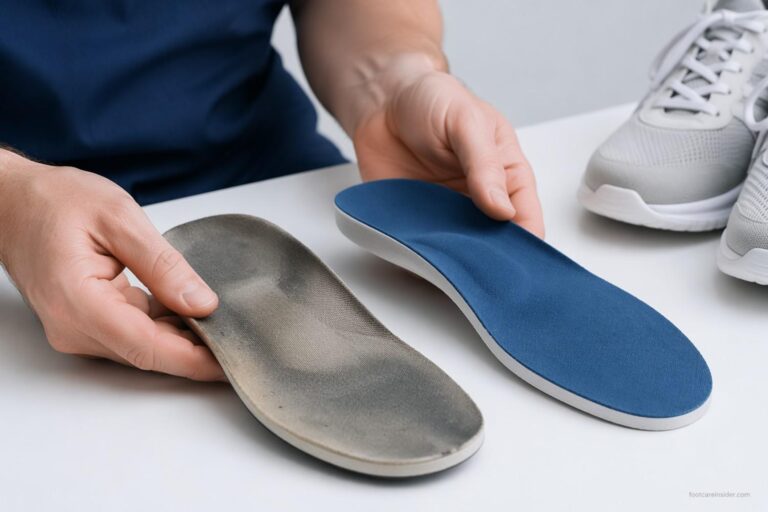
One common issue is compression. A soft stock insole can feel comfortable initially but may flatten with repeated standing and walking, reducing the cushioning and support it provided when new.
Another issue is stability. If your feet feel increasingly tired or unsupported during a long shift, a very soft insole may not provide the structure you prefer.
Fit can be just as important. Factory workers often wear safety shoes or work boots that already have limited internal space. An insole that is too thick can make the toes feel cramped or change how securely the foot sits inside the footwear.
Durability matters as well. An option that works nicely for occasional use may not be the most sensible choice when it is exposed to the same demanding workload five days a week.
Narrowing Down the Right Insole for Factory Work
For most factory workers, the main decision comes down to finding the right balance between cushioning, support, stability, fit, and durability.
If your main complaint is general foot fatigue from standing on hard flooring, a cushioning-focused insole may be the most sensible starting direction. It can add another layer between your feet and the firm surface without necessarily making the shoe feel highly structured.
If your arches feel tired or you want more structure during a long shift, a supportive insole may make more sense than a very soft comfort model. This is particularly relevant when your work involves both standing and repeated walking.
If your feet feel less stable as the shift progresses, a stability-focused design may be worth considering. It generally prioritizes structure over the softer, more forgiving feel of a basic cushioned insole.
For work boots or safety shoes with limited internal room, a slim or low-volume insole can be the better route. A thinner profile may give you useful support or cushioning without making the footwear excessively tight.
Finally, if you put very high mileage through your work shoes or spend long shifts on hard industrial floors, durability deserves equal attention. An insole that retains its shape and support over repeated use may make more sense than one that feels exceptionally plush when new but compresses quickly.
The right direction therefore depends less on finding one universal “best” insole and more on matching the insole to the way your factory job actually loads your feet.
Best for Long Shifts on Hard Factory Floors
If most of your shift is spent standing at a workstation or moving across concrete and other hard flooring, start with a cushioning-focused insole that is built to retain its feel under repeated use. This direction makes more sense than an extremely soft everyday comfort insole when the floor is firm and the shift is long. The tradeoff is that maximum cushioning can feel less structured underfoot.
Best for Tired Arches During Standing and Walking
If your arches gradually feel tired while you move between work areas, a structured arch-support insole may be a better starting point than a very soft cushion. It can provide a more supportive feel during repeated movement and long periods on your feet. The limitation is that noticeable arch structure can take up more shoe space and may not suit everyone.
Best if Your Work Boots Feel Tight
For safety shoes or work boots with limited internal room, a thin or low-profile insole can solve a problem that a thicker model cannot. It leaves more room around the toes while still allowing you to change the cushioning or support underfoot. Compared with heavy-duty insoles, the compromise is usually less material and potentially less cushioning.
Best When Your Current Insole Flattens Too Quickly
If your stock insole feels good at first but becomes noticeably flatter or less supportive after repeated factory shifts, look for a durability-focused insole with firmer support retention. This is more practical for workers who use the same footwear heavily throughout the week than choosing another very plush insole. The drawback is that firmer materials may feel less immediately soft.
Best When Stability Matters More Than Plush Cushioning
If your feet feel increasingly unsupported as a shift progresses, particularly when your job involves frequent turning, walking, and standing, a stability-focused insole may be the better direction. It prioritizes structure and a controlled underfoot feel rather than maximum softness. That can be useful for active factory work, although it may feel firmer than a conventional cushioned insole.
For workers comparing cushioning with more structured support, Cushioning vs Stability Insoles can help clarify which direction better matches the way you spend your shift.
FAQs
Should factory workers choose soft or firm insoles?
If hard floors are the main source of general foot fatigue, cushioning can make sense. If your feet feel unsupported during walking and standing, a somewhat firmer structured option may be more appropriate.
Will a thicker insole fit inside work boots?
Not always. Safety shoes and work boots can have limited internal space, so check the existing fit before choosing a thick model. A low-profile insole is often easier when your footwear already feels snug.
Should I remove the original factory insole?
If it is removable, replacing it can provide more usable space than simply placing another insole on top. Check the footwear manufacturer’s guidance and make sure the replacement does not compromise fit or stability.
How often should factory workers replace their insoles?
There is no universal schedule. Consider replacing them when the cushioning has noticeably compressed, the support has changed, or the insole no longer feels consistent throughout your shift.
The Best Starting Point Depends on Your Shift
If your main problem is hard-floor fatigue, start with cushioning. If your arches feel tired or you want more structure, consider support or stability. If your work boots are already tight, choose a low-profile option first. For demanding shifts where stock insoles flatten quickly, prioritize durability and support retention rather than maximum softness.