Best Insoles for Running With Flat Feet
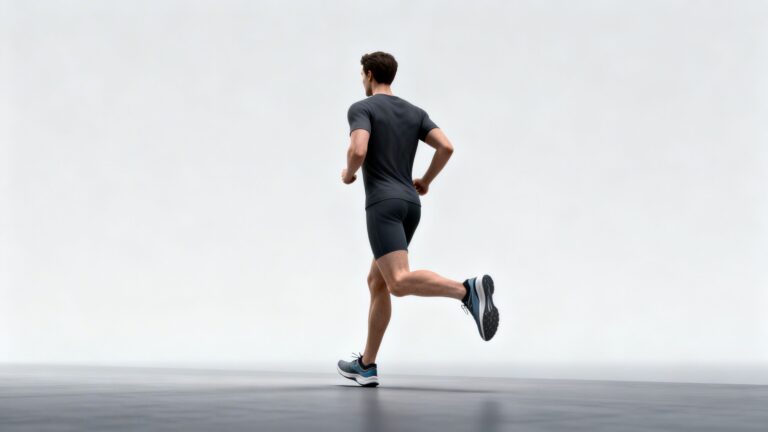
Running should feel smooth and controlled—but if you have flat feet, it often feels like the opposite. Instead of stability, you get inward rolling. Instead of efficient movement, you get fatigue, soreness, and sometimes pain that creeps up into your knees or hips.
That’s where the search for the best running insoles flat feet begins.
Flat feet change how your body absorbs impact. Without a proper arch, every step places more strain on the foot and surrounding joints. Over time, that can lead to issues like shin splints, plantar fasciitis, or knee discomfort—especially if your shoes aren’t doing enough to support you.
The right insoles don’t just add comfort—they help correct alignment, reduce stress, and improve how your foot moves with each stride.
If you’re also trying to figure out whether your shoes are part of the problem, Are stability shoes better than regular running shoes for flat feet? is a useful next step.
Why Running With Flat Feet Feels Different
When you run, your foot naturally rolls inward slightly to absorb shock. That’s normal.
But with flat feet:
- The arch collapses too much
- The foot rolls inward excessively (overpronation)
- The ankle loses stability
This creates a chain reaction:
- The knee rotates inward
- The hip compensates
- Impact forces increase
Over time, this repeated pattern leads to fatigue and injury risk.
If you’ve noticed this inward motion, it’s worth understanding how support works in: insoles for overpronation, since both conditions are closely related.
Why Standard Insoles Fail for Running
Most running shoes come with basic insoles. They’re designed for general comfort—not for structural correction.
Common issues with standard insoles:
- Too soft → allow arch collapse
- Too thin → lack support
- No stability features → no motion control
They might feel comfortable for a short run, but they don’t address the root problem.
For flat-footed runners, this means:
- Continued overpronation
- Increased fatigue
- Higher injury risk
What Features Actually Matter
Not all insoles are built the same. If you’re choosing the best running insoles flat feet, you need to focus on structure—not just cushioning.
1. Firm Arch Support
This is the most important feature.
The arch support should:
- Prevent excessive collapse
- Match your foot height
- Maintain shape under pressure
Too soft = no correction
Too rigid = discomfort
Balanced support is key.
2. Motion Control / Stability
Flat feet require control—not just comfort.
Look for:
- Reinforced medial (inner foot) support
- Stability structures that guide foot movement
This helps reduce inward rolling and improves alignment.
3. Deep Heel Cup
A good heel cup:
- Centers the heel
- Reduces side-to-side movement
- Improves overall stability
Without it, your foot remains unstable during impact.
4. Shock Absorption (But Controlled)
Running requires cushioning—but not at the cost of support.
The best insoles combine:
- Firm base structure
- Moderate cushioning layer
If you’re unsure how softness affects performance, see soft vs firm insoles for a deeper comparison.
5. Durable Materials
Running puts repeated stress on insoles.
Look for:
- High-density foam (EVA or PU)
- Reinforced arch structure
- Materials that don’t flatten quickly
Durability ensures long-term performance—not just short-term comfort.
How to Choose the Right Insoles (Simple Framework)
Instead of guessing, use this framework:
Step 1: Identify Your Running Style
- Casual runner → moderate support
- Frequent runner → strong support
- High-impact runner → stability + durability
Step 2: Match Support Level
- Mild flat feet → flexible support
- Moderate → structured support
- Severe → firm, motion-control design
Step 3: Consider Shoe Fit
Some insoles are thicker than others.
Make sure:
- They fit without crowding
- You remove the original insole if needed
Step 4: Match to Symptoms
- Heel pain → focus on heel stability
- Shin splints → prioritize motion control
- Knee pain → strong arch + alignment support
If you’re dealing with lower leg pain from running, choosing the right support can also help with issues like shin splints, where proper alignment plays a key role in reducing stress on the muscles.
Step 5: Think Long-Term
The goal isn’t just comfort today—it’s reducing stress over time.
Proper support improves:
- Running efficiency
- Injury prevention
- Overall comfort
Why the Right Choice Matters
Choosing the right running insoles flat feet isn’t just about feeling better—it’s about protecting your body.
When your foot is properly supported:
- Impact is distributed evenly
- Alignment improves
- Fatigue decreases
That means:
- Better runs
- Fewer injuries
- More consistency
Best Types of Insoles for Running With Flat Feet
Now that you understand what to look for, the next step is choosing the right type of insole for your specific running needs.
Not every runner with flat feet needs the same level of support. Some need strong correction, others need a balance between comfort and stability.
Below are the most effective categories for running insoles flat feet, broken down in a way that actually helps you decide.
1. Firm Support Insoles (Maximum Stability)
These are designed for runners who experience clear overpronation or frequent discomfort.
They focus on:
- Strong arch support
- Motion control
- Structural correction
Best for:
- Moderate to severe flat feet
- Runners with knee or shin pain
- Long-distance or frequent runners
Pros:
- Excellent stability
- Reduces inward rolling
- Helps improve alignment
Limitations:
- Can feel stiff at first
- Requires short break-in period
Insight:
If your foot collapses noticeably when running, this is usually the most effective option.
2. Moderate Support Insoles (Balanced Performance)
These offer a mix of support and flexibility.
They don’t fully restrict movement but still provide enough structure to guide your foot.
Best for:
- Mild to moderate flat feet
- Casual or short-distance runners
- Those transitioning from basic insoles
Pros:
- More comfortable out of the box
- Good balance between support and cushioning
- Versatile for different activities
Limitations:
- Less control than firm models
- May not be enough for severe overpronation
Insight:
This is a solid middle-ground if you’re not dealing with strong symptoms.
3. Cushion-Focused Insoles (Comfort First)
These prioritize shock absorption over structure.
They’re softer and focus on reducing impact rather than correcting alignment.
Best for:
- Light runners
- Occasional discomfort
- Hard running surfaces
Pros:
- Immediate comfort
- Good shock absorption
- Reduces foot fatigue
Limitations:
- Minimal arch correction
- Doesn’t control overpronation well
Insight:
If you rely only on soft insoles, your arch may still collapse. That’s why structure often matters more than softness.
4. Stability Running Insoles (Hybrid Design)
These combine firm support with cushioning.
They are specifically designed for running mechanics and repetitive impact.
Best for:
- Regular runners
- Mixed terrain (road + treadmill)
- Those needing both comfort and control
Pros:
- Balanced design
- Good for long-term use
- Supports natural movement while guiding alignment
Limitations:
- Slightly more expensive
- Requires correct fit for best performance
Insight:
This is often the best choice for runners who want performance without sacrificing comfort.
5. Low-Profile Insoles (Tight Shoe Fit)
Some running shoes don’t have much space inside. That’s where low-profile insoles come in.
They provide support without adding bulk.
Best for:
- Tight-fitting running shoes
- Lightweight runners
- Minimalist shoe users
Pros:
- Easy to fit
- Doesn’t crowd the shoe
- Maintains running feel
Limitations:
- Less cushioning
- Reduced support compared to thicker models
Insight:
Useful when space is limited, but not ideal for strong correction needs.
How These Options Compare
If you simplify everything:
- Need correction → Firm support
- Need balance → Stability insoles
- Need comfort → Cushion-focused
- Need versatility → Moderate support
- Need fit → Low-profile
Choosing the Right One for You
Here’s a simple way to decide:
- Pain + instability → Firm support
- Daily running + mild discomfort → Stability
- Occasional use → Moderate support
- Comfort priority → Cushion
- Tight shoes → Low-profile
If your flat feet are tied to inward motion, structured support like best insoles for overpronation can help stabilize your stride.
If you also hike, see the best hiking insoles for flat feet, where the needs are different from running.
Frequently Asked Questions
Are running insoles necessary for flat feet?
Not always—but they significantly improve comfort and reduce injury risk for many runners.
Can insoles improve running performance?
Yes. Better alignment often leads to more efficient movement and reduced fatigue.
How long do running insoles last?
Most last between 6–12 months depending on usage and intensity.
Should insoles replace the original shoe insert?
In most cases, yes. Removing the original insert ensures proper fit and performance.
Are custom orthotics better?
They can be helpful in severe cases, but many runners do well with high-quality over-the-counter options.
Final Verdict: What Actually Works
The best running insoles flat feet are not the softest—they’re the ones that support your structure while allowing natural movement.
If you’re dealing with:
- Strong inward rolling → go firm
- Regular running → choose stability
- Light discomfort → moderate support works
The key is matching the insole to your actual needs—not just what feels comfortable at first.