Full Length vs 3/4 Insoles: Which Should You Choose?
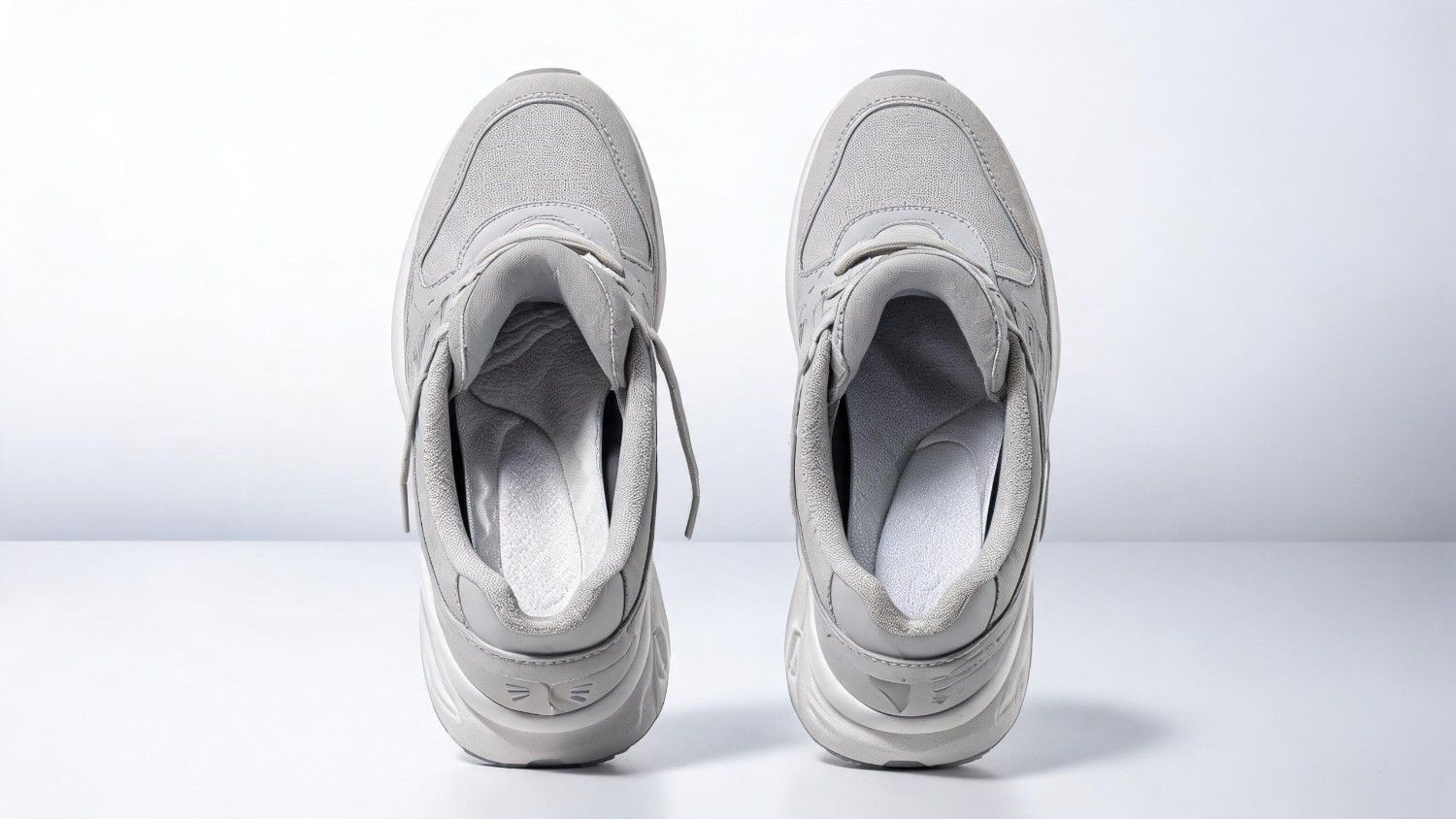
Choosing between full length and 3/4 insoles can be surprisingly confusing. Both are designed to improve comfort and support, but they work differently and fit different types of footwear.
The choice matters because an insole that works well in one shoe may feel awkward or ineffective in another. Someone standing all day in work shoes may have different needs than someone looking for arch support in dress shoes.
Full length insoles cover the entire footbed and focus on complete-foot cushioning and support. In contrast, 3/4 insoles support the heel and arch while leaving the forefoot area untouched, making them easier to fit into tighter shoes.
Heel cups are a third option; see heel cups vs full-length insoles.
Neither option is automatically better. The right choice depends on your footwear, activity level, comfort preferences, and support needs.
What Are Full Length Insoles?
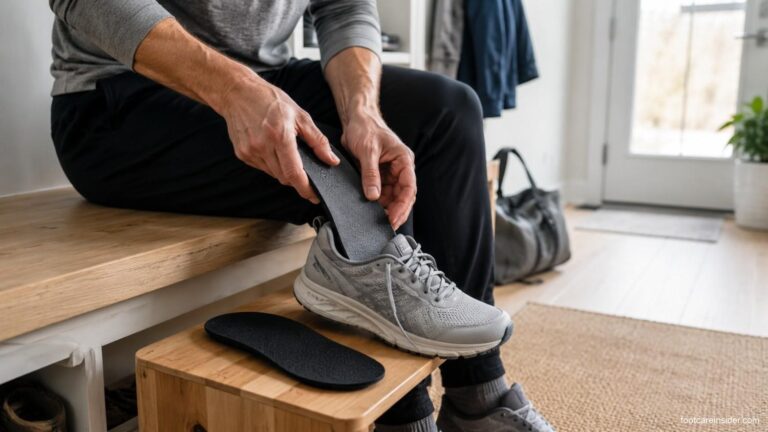
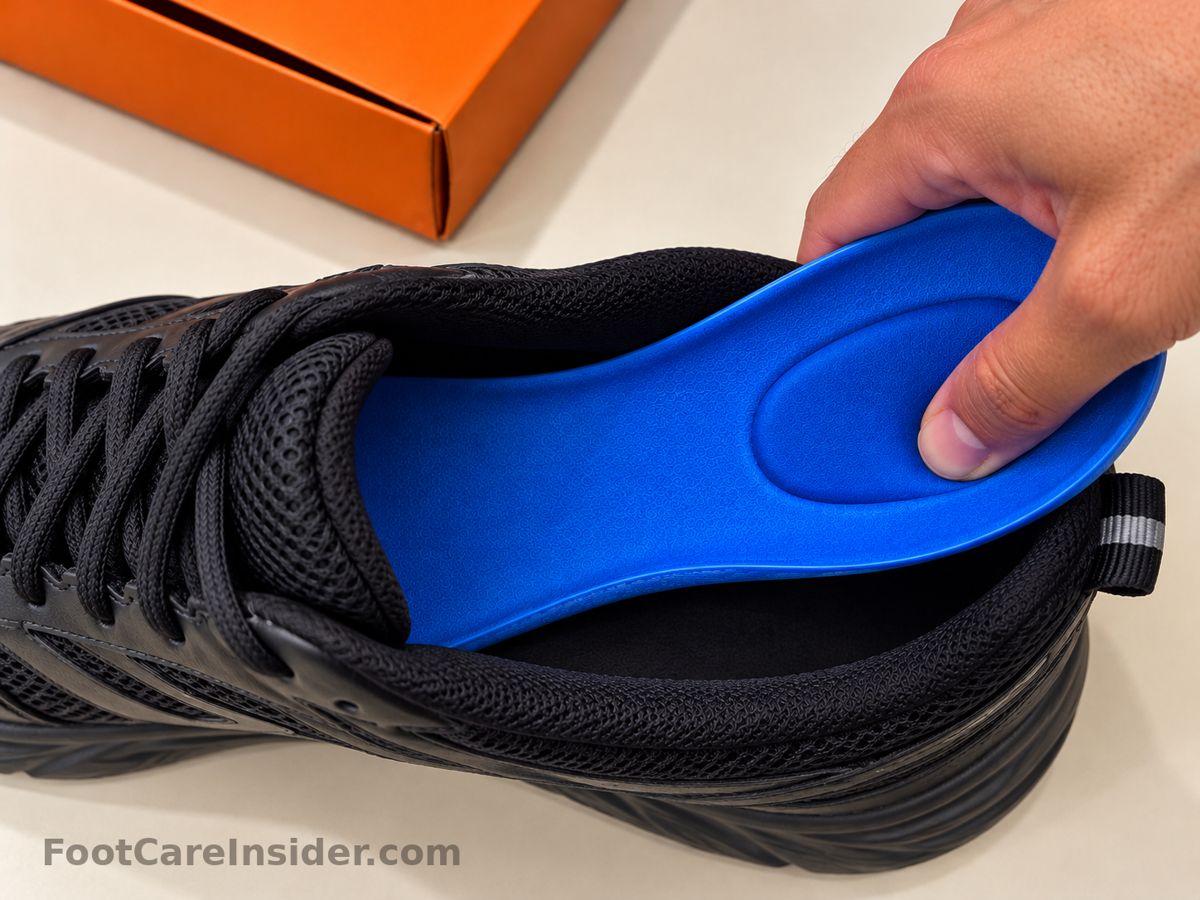
Full length insoles extend from the heel all the way to the toes.
They replace or sit on top of the shoe’s existing footbed and provide support across the entire foot.
Common features include:
- full-foot cushioning
- arch support
- heel stabilization
- pressure distribution
Because they cover the entire foot, they often create a more uniform feel during walking and standing.
Many athletic, work, and walking insoles use a full length design because it supports the entire stride cycle.
People researching best insoles for flat feet frequently encounter full length designs because they allow support structures to work across the entire foot.
What Are 3/4 Insoles?
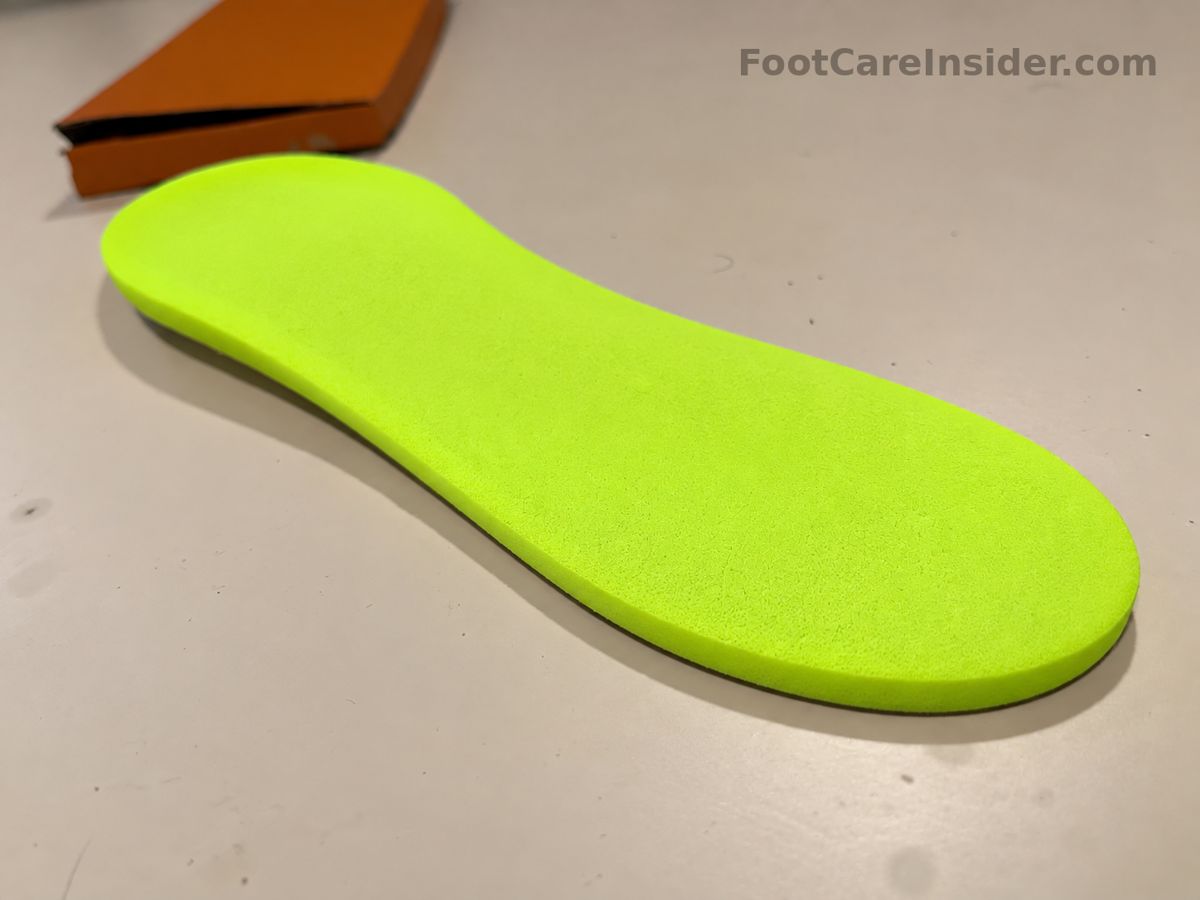
3/4 insoles cover only the heel and arch area.
The front portion stops before reaching the toes.
Their purpose is to provide support where many people need it most while preserving existing toe space.
They are commonly used in:
- dress shoes
- formal footwear
- narrow shoes
- shoes with limited depth
Because they leave the forefoot untouched, they can often be inserted without removing the original shoe liner.
This flexibility makes them attractive for footwear where full length insoles simply will not fit comfortably.
Structural Differences
The most obvious difference is coverage.
Full length insoles support:
- heel
- arch
- midfoot
- forefoot
3/4 insoles primarily focus on:
- heel control
- arch support
- rear-foot stability
This difference influences how pressure moves through the foot.
Full length models tend to spread force more evenly from heel strike through toe-off.
3/4 models concentrate support under the rear portion of the foot while allowing the original shoe structure to manage the forefoot.
For people who need complete cushioning, full length designs often feel more integrated. For those needing only targeted support, 3/4 options may provide enough assistance without changing the fit of the shoe.
Material and Functional Differences
Both styles can be made from similar materials:
- EVA foam
- PU foam
- gel inserts
- cork composites
- orthotic-grade materials
The bigger difference is often how those materials are distributed.
A full length insole may provide cushioning beneath the heel, arch, and forefoot simultaneously.
A 3/4 insole typically places most of its support resources beneath the arch and heel.
This creates a different feel during movement.
Full length insoles often deliver a smoother transition during walking because the entire foot remains on a consistent surface.
By comparison, 3/4 insoles prioritize support efficiency while minimizing space requirements.
Readers comparing soft vs firm insoles often notice that firmness becomes more noticeable in 3/4 designs because support is concentrated in a smaller area.
Pressure Distribution and Support
Pressure management is another important distinction.
Full length insoles generally distribute force across a larger surface area.
This can help reduce concentrated loading beneath specific parts of the foot during prolonged standing and walking.
3/4 insoles focus more on controlling arch position and heel mechanics.
While they may still improve pressure distribution, they rely more heavily on the existing shoe structure in the forefoot area.
As a result, someone working long shifts may notice greater overall cushioning from a full length design, while a person wearing formal footwear may prioritize the fit advantages of a 3/4 model.
Intended Use Cases
Full length insoles are commonly chosen for:
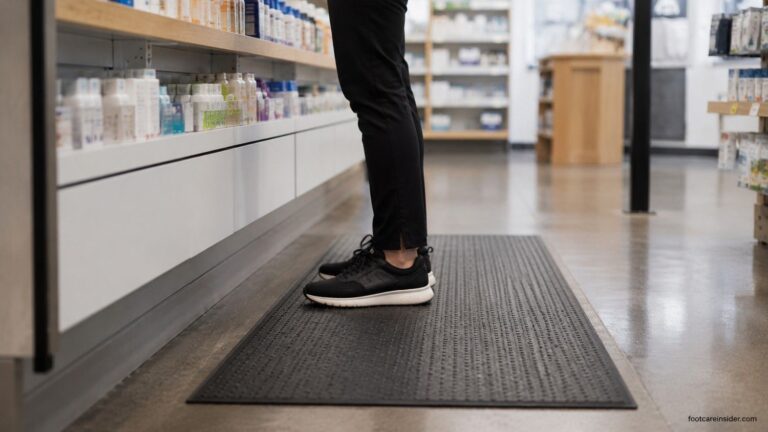
- standing jobs
- warehouse work
- healthcare shifts
- athletic activity
- walking programs
- hiking
The additional coverage often improves comfort during repetitive loading.
People researching insoles for standing all day frequently encounter full length options because they provide support across the entire foot.
3/4 insoles are often preferred for:
- dress shoes
- business footwear
- casual shoes with limited space
- shoes that already have adequate forefoot cushioning
In these situations, maintaining shoe fit can be just as important as adding support.
Cost and Long-Term Value
Pricing varies considerably depending on materials and design.
Generally speaking:
- Basic full length insoles often cost slightly more because they use more material.
- Premium 3/4 orthotic designs can sometimes cost the same or more than full length alternatives.
Durability depends more on construction quality than coverage length alone.
A high-quality 3/4 insole may outlast a poorly made full length model.
From a value perspective, the better choice is usually the one that fits both the shoe and the intended use.
A full length insole that cannot fit properly offers little value. Likewise, a 3/4 insole may feel insufficient if full-foot cushioning is the primary goal.
Pros and Cons of Full Length Insoles
Full length insoles appeal to people who want complete-foot support and cushioning.
Because they cover the entire footbed, they provide a consistent surface from heel to toe. This often creates a more natural feel during walking and prolonged standing.
The advantages include:
- better overall pressure distribution
- full-foot cushioning
- improved comfort on hard surfaces
- smoother walking transitions
However, they also have limitations.
The additional material takes up more space inside the shoe. In narrow footwear, this can sometimes create a tighter fit or reduce toe room.
For people wearing work boots, athletic shoes, or walking shoes, this is often not a major issue. In dress shoes, it can be more noticeable.
Pros and Cons of 3/4 Insoles
3/4 insoles focus support where many people need it most: the heel and arch.
Because they stop before the forefoot, they preserve valuable space inside the shoe.
The benefits include:
- easier fit in tight footwear
- good arch support
- reduced crowding in the toe box
- compatibility with dress shoes
The tradeoff is reduced forefoot coverage.
People seeking maximum cushioning beneath the ball of the foot may find 3/4 designs less comfortable during long standing sessions compared with full length alternatives.
For targeted support, however, many users find them highly effective.
Who Should Choose Full Length Insoles?
This is for you if:
- you stand for long periods
- you walk frequently throughout the day
- you wear athletic shoes or work footwear
- you want cushioning across the entire foot
- your shoes have enough room to accommodate a full insert
Full length designs often work particularly well for warehouse employees, healthcare workers, retail staff, and active individuals who spend many hours on their feet.
The combination of support and pressure distribution tends to benefit repetitive daily use.
Who Should Choose 3/4 Insoles?
This is for you if:
- your shoes have limited interior space
- you wear dress shoes regularly
- you mainly need arch and heel support
- forefoot cushioning is already adequate
- you want support without significantly altering shoe fit
Many people choose 3/4 insoles specifically because they fit into shoes where full length options simply are not practical.
This makes them a useful solution for formal and business footwear.
Long-Term Comparison
Durability depends largely on materials and construction quality, but usage patterns matter too.
Full length insoles often experience wear across a larger surface area. This can spread loading more evenly over time.
3/4 insoles concentrate support in smaller regions, particularly beneath the arch and heel.
In terms of comfort:
- Full length models often provide greater cushioning consistency.
- 3/4 models often provide more flexibility regarding shoe compatibility.
In terms of performance:
- Full length designs generally favor comfort and pressure distribution.
- 3/4 designs generally favor support efficiency and fit preservation.
Micro Comparison Summary
- Full Length Insoles = better for complete-foot cushioning, standing, and walking comfort.
- 3/4 Insoles = better for arch support in tighter-fitting footwear and dress shoes.
The best option depends more on your shoes and daily activities than on the insole style itself.
FAQ
Are full length insoles better for standing all day?
They often are because they distribute pressure across the entire foot. Many people who spend long hours standing prefer the added cushioning and support coverage.
Do 3/4 insoles provide enough arch support?
Yes. Many 3/4 designs are specifically built to support the arch and heel. In some cases, they provide support comparable to full length models.
Can I use 3/4 insoles in athletic shoes?
You can, but many athletes prefer full length options because they provide cushioning beneath both the heel and forefoot during movement.
Why do dress shoes often work better with 3/4 insoles?
Dress shoes typically have less interior space. A 3/4 design preserves toe room while still adding support beneath the heel and arch.
Which option lasts longer?
Durability depends more on material quality and daily use than coverage length. A premium 3/4 insole can outlast a budget full length model.
Can I switch between both styles?
Absolutely. Many people use full length insoles in work or athletic shoes and 3/4 insoles in formal footwear depending on the situation.
Our picks: Pick by how much room your shoes have.
Full-length insoles – Support and cushioning from heel to toe for work, walking and athletic shoes.
Heel cups – Heel-focused cushioning and stability that leaves toe room alone.
Final Verdict
When comparing full length vs 3/4 insoles, neither option is universally better.
Full length insoles are usually the stronger choice when complete-foot cushioning, standing comfort, and walking support are the primary goals.
3/4 insoles excel when shoe space is limited and targeted arch support is the priority.
The simplest way to decide is to consider your footwear first. If your shoes comfortably accommodate a full insert, a full length design often provides the most comprehensive support. If space is limited, a quality 3/4 insole may deliver the support you need without compromising fit.